Large-Scale Hardwood & Tile Removal — Mountain-Style Home

Case Study

Project Photos

The Job

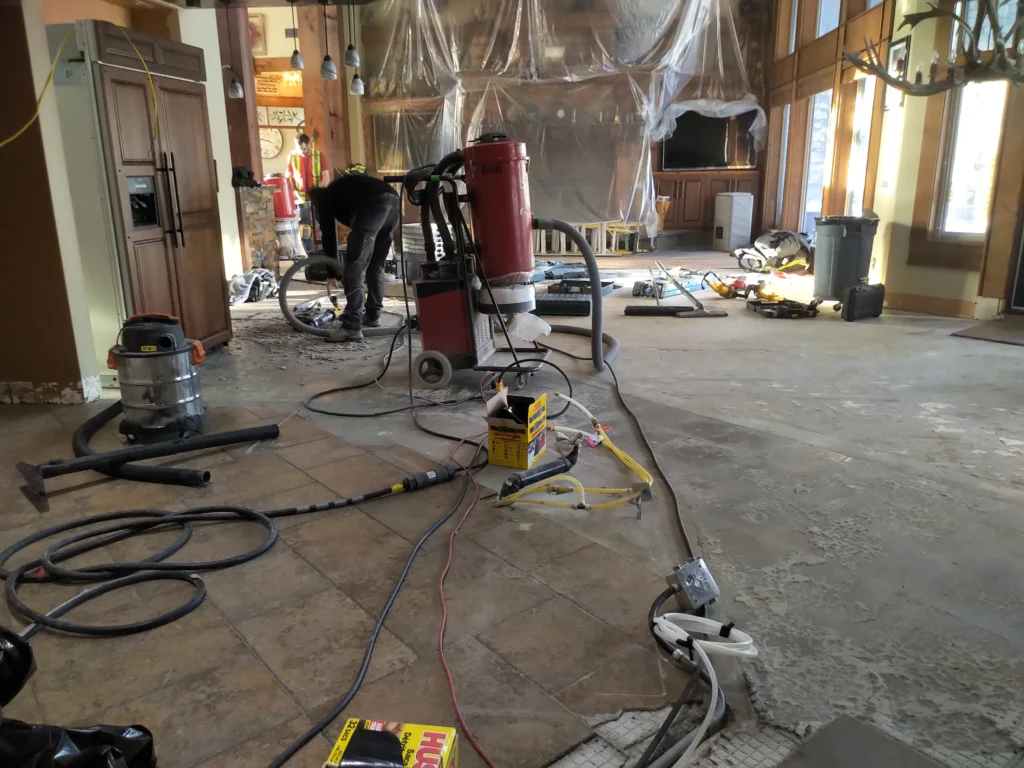
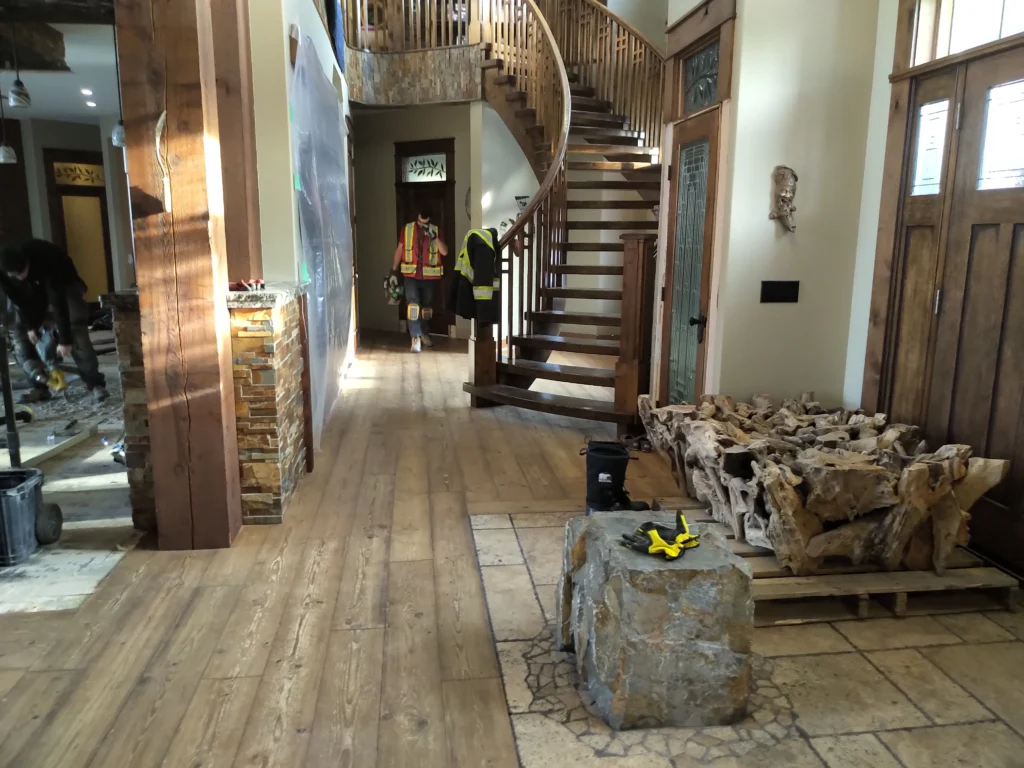
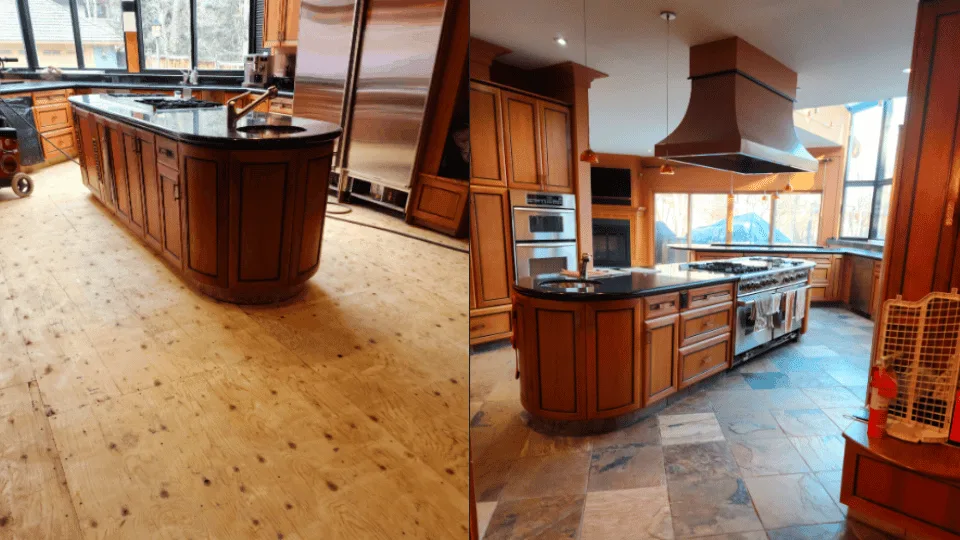
A large, high-end mountain-style home with hardwood flooring and tile spanning multiple living spaces, including a great room with a curved staircase and stacked-stone finishes. Both materials needed to come out before new flooring could go in.

The Challenge

A job this size, in a home this finished, comes with a different kind of pressure than a standard removal — the stonework, media wall, staircase, and built-in cabinetry all had to stay untouched while two different flooring materials came out in two separate rooms.

What We Did

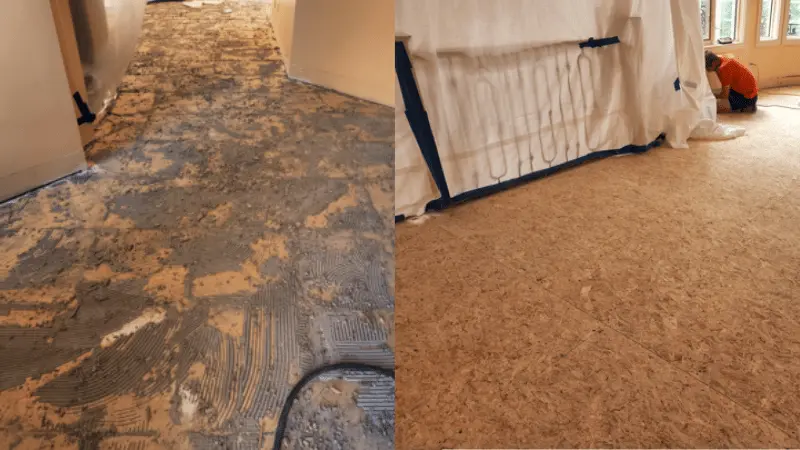
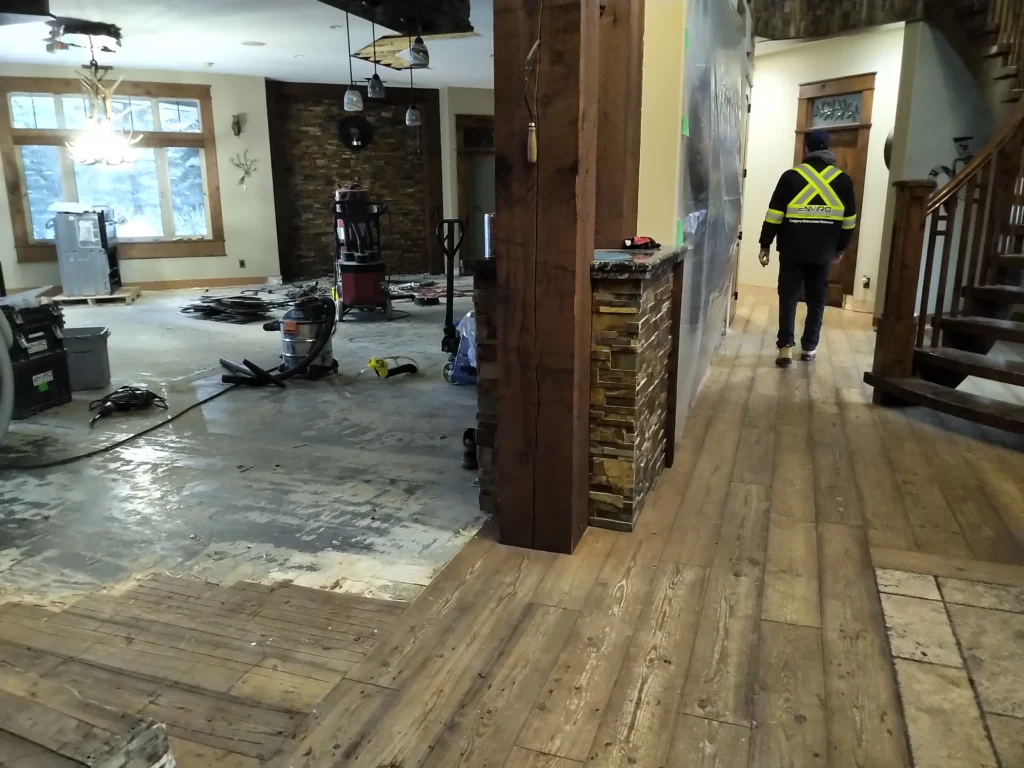
Before any material came up, our crew sealed the work area with plastic containment — draping the media wall and stone fireplace in the great room, and protecting the finished hardwood in adjoining rooms that weren’t part of the job. Nothing got removed until the containment was in place.

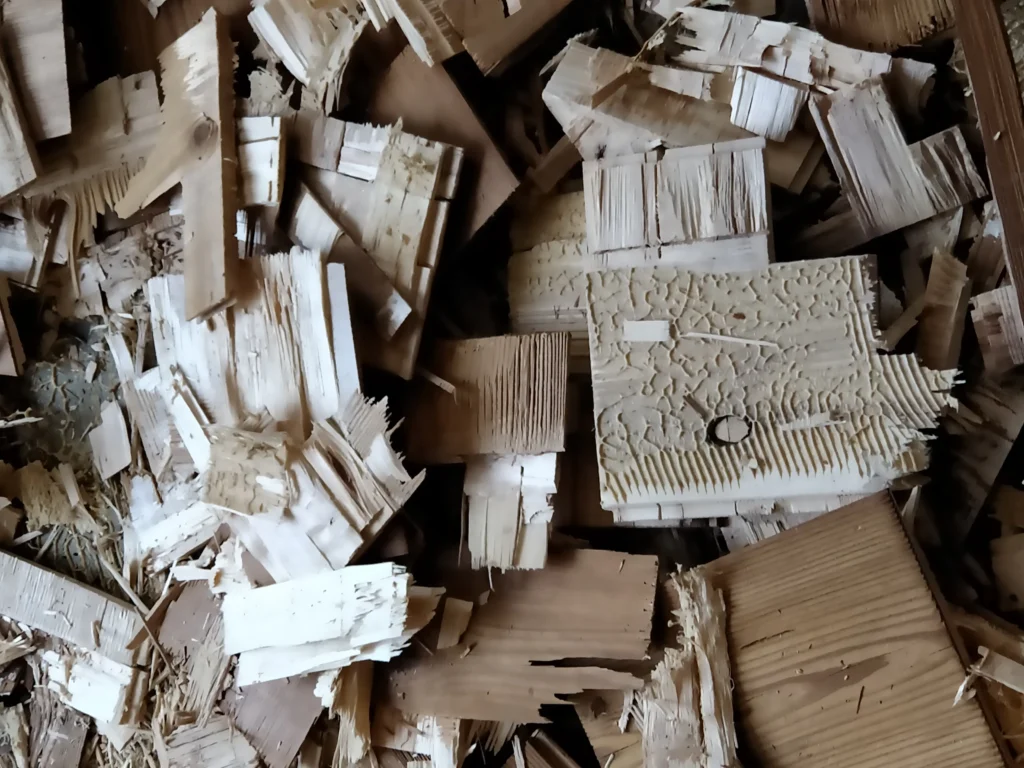
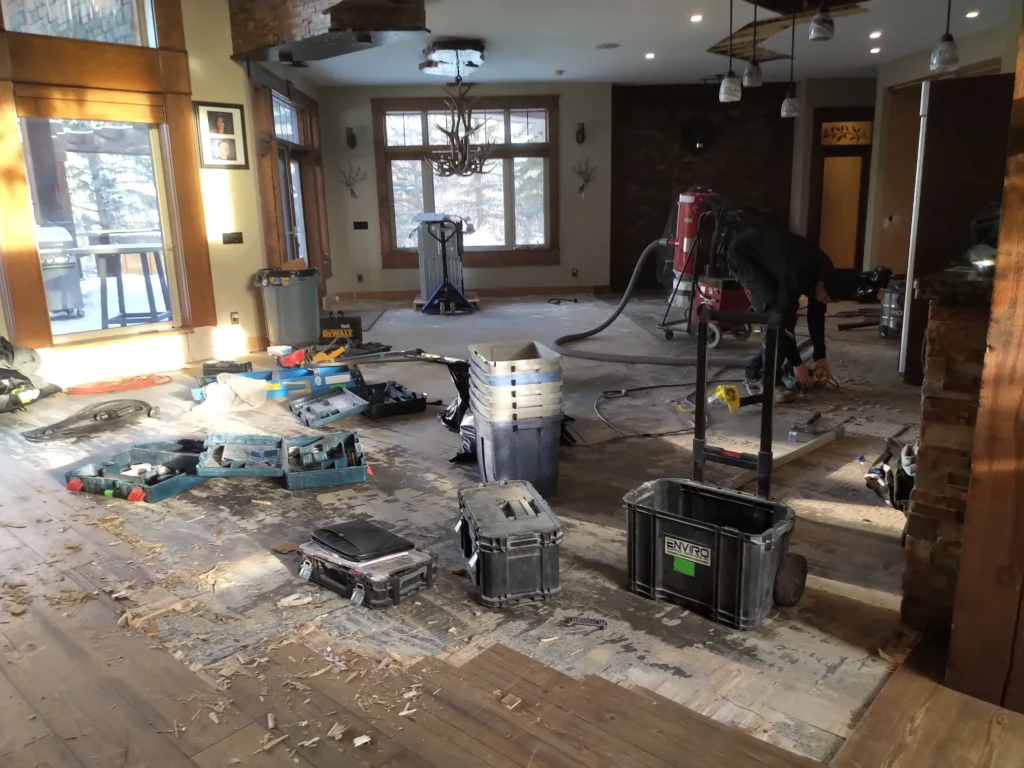
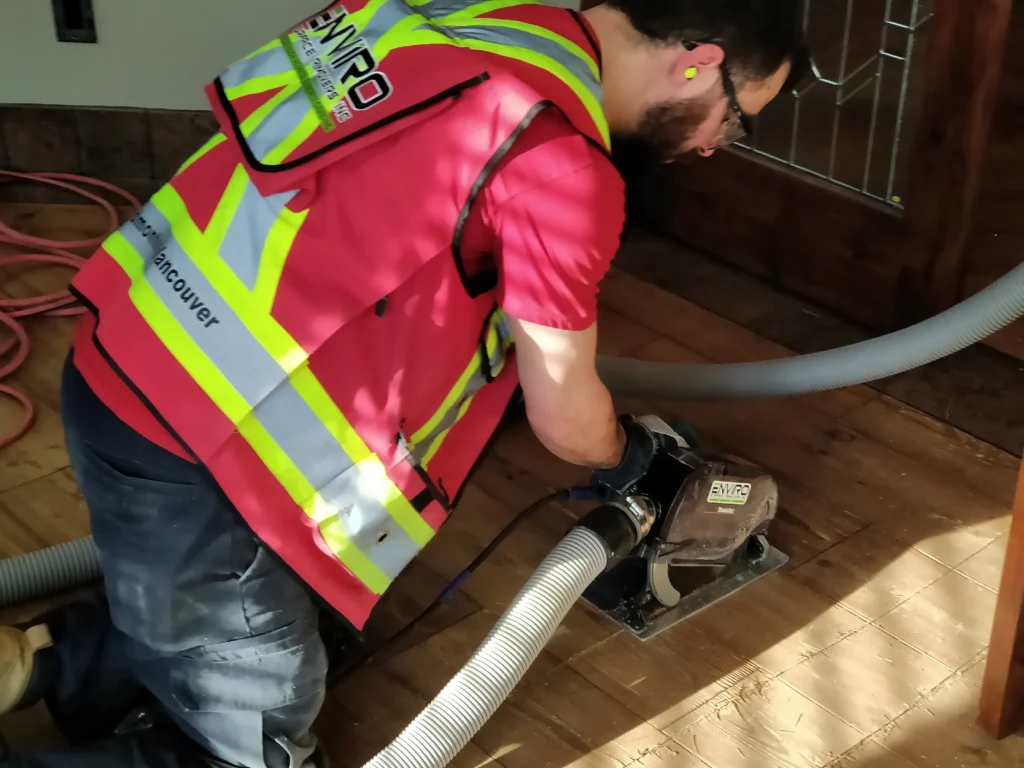
Hardwood came out first, ground down to bare concrete with our dustless equipment. HEPA extraction pulled dust at the source as the work happened, rather than letting it settle across a home full of natural wood finishes and stonework that would have been difficult to fully clean afterward. Tile removal in the adjoining great room followed the same process — grinder, hose, and HEPA vac working together instead of a shop-vac afterthought.

The Result

By the end of the job, the line between finished and unfinished told the whole story: bare, swept concrete slab on one side, original flooring untouched on the other, with nothing left behind but dust-free, ready-to-build-on subfloor.

Commercial Tile Removal — A&W Restaurant

Case Study

The Job

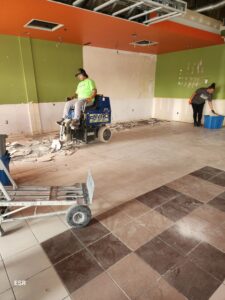
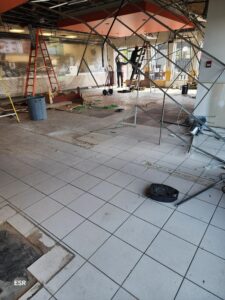
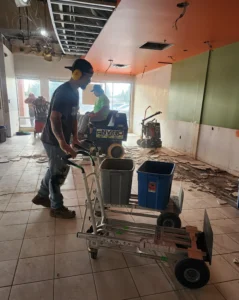
Full tile removal across the dining room floor of an operating A&W restaurant, alongside ceiling grid demolition, ahead of a renovation.

The Challenge

A commercial food-service space comes with its own set of constraints — the floor had to come out fast and clean, with a crew working around overhead demo happening at the same time, in a space that still needed to reopen on schedule.

What We Did

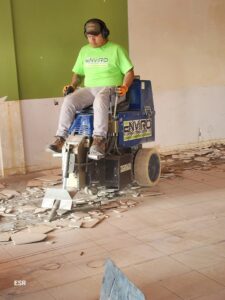
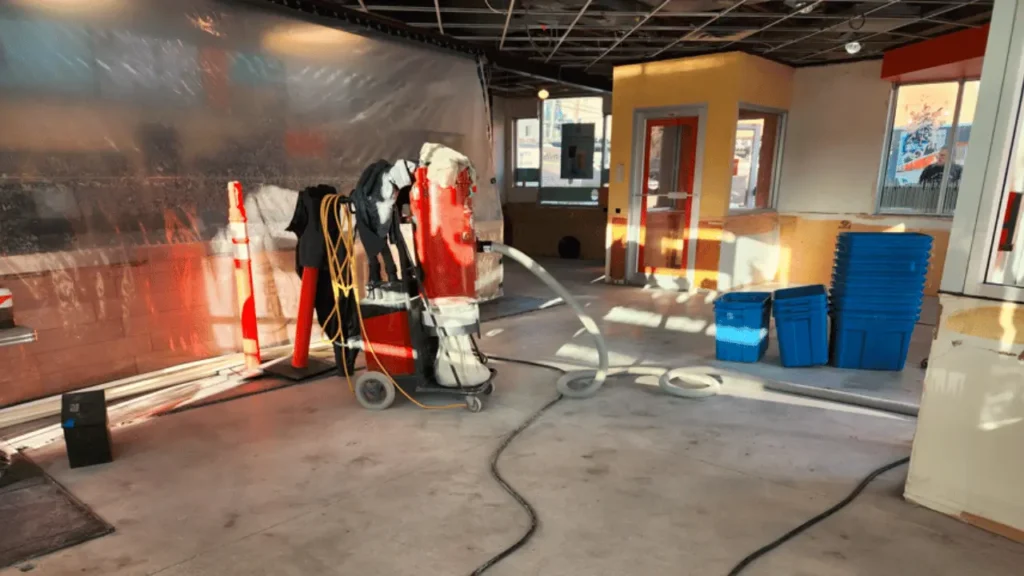
Our crew used ride-on tile stripping equipment to clear the dining room floor efficiently across a large commercial footprint, hauling debris out with wheeled carts as the job progressed rather than letting it pile up mid-space. Crews worked in full PPE — hearing protection, eye protection, gloves — with the same equipment and protocol used on every job, residential or commercial.

The tile came up down to bare subfloor across the full dining area, with debris sorted and hauled the same visit. No lingering mess, no second trip required to finish the cleanup.

The Result

A cleared, ready subfloor across the full restaurant footprint, on the timeline a commercial reopening depends on.

Residential Tile Removal — Natural Stone Floor

Case Study

The Job

Full removal of natural stone tile flooring in a residential home, including the kitchen and a sunroom-style space opening onto the backyard.

The Challenge

Natural stone tile is heavier and more labor-intensive to remove than standard ceramic, and this job ran right up against kitchen cabinetry, built-in appliances, and full-height sliding glass doors — all of which had to stay protected and undamaged while the floor came out around them.

What We Did

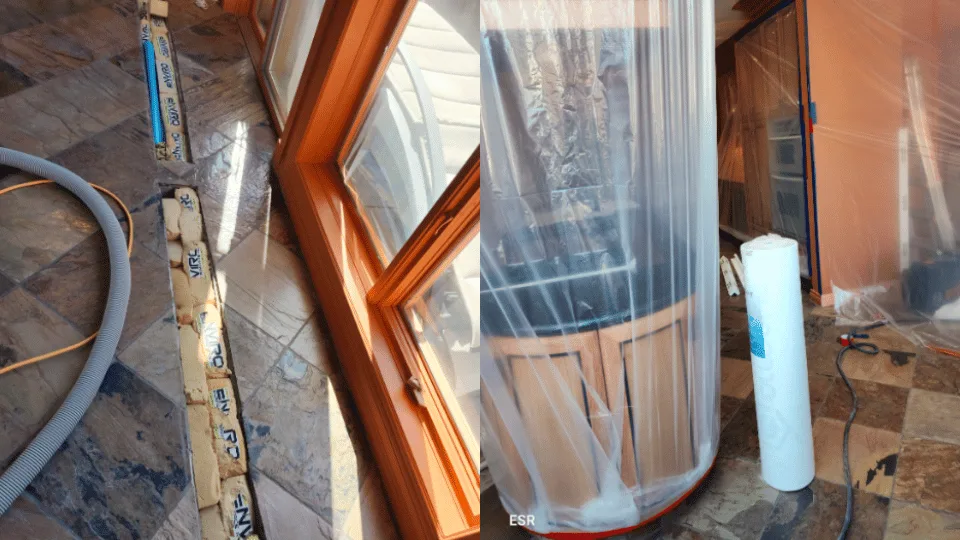
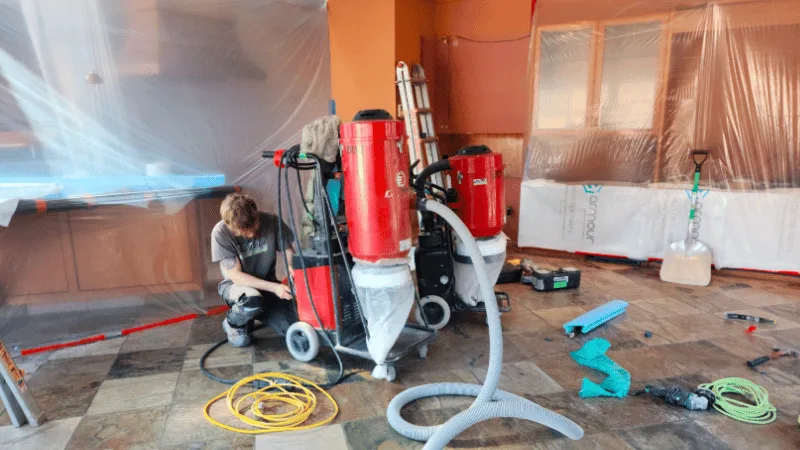
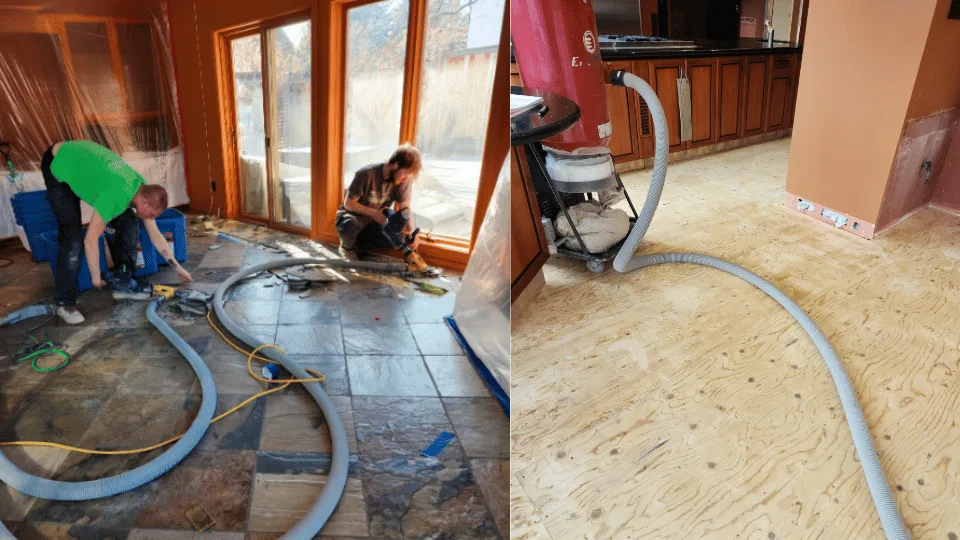
Before any tile came up, our crew built full containment around the kitchen cabinets and built-in oven, wrapping them in plastic sheeting sealed with tape rather than just draping loose covers over them. A protective fleece barrier was rolled out to shield finished surfaces nearby from dust and debris during the job.

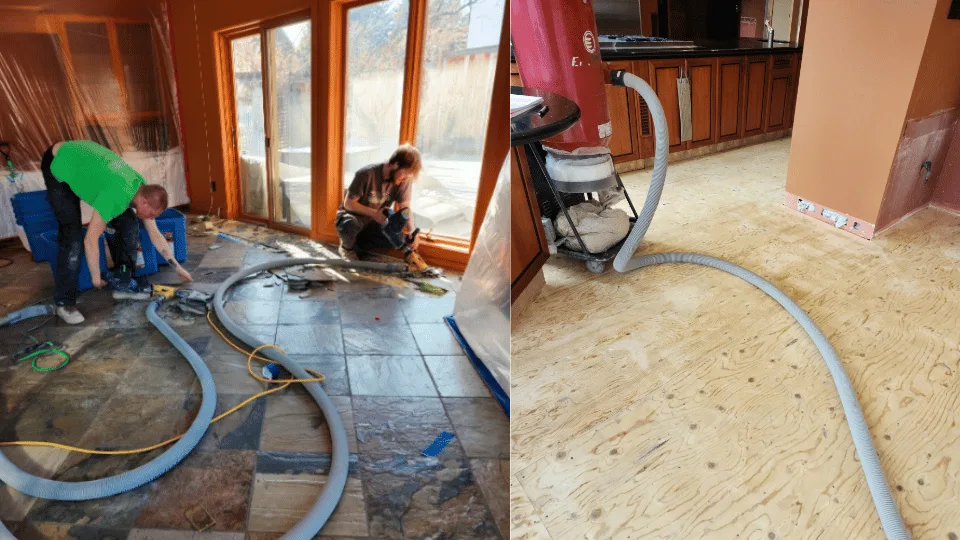
Our crew then worked the tile out section by section with handheld extraction tools, hoses connected directly to HEPA vacuum equipment running the entire time — dust pulled at the source rather than settling across the space. Two technicians worked in tandem, one clearing tile near the window wall, the other working the floor toward the room’s center, so the job moved efficiently without leaving half-finished sections sitting exposed.

The Result

A fully cleared subfloor, ready for whatever comes next, with the kitchen cabinetry, appliances, and windows all protected and untouched throughout the job.

Residential Tile Removal — Full Main Floor

Case Study

The Job

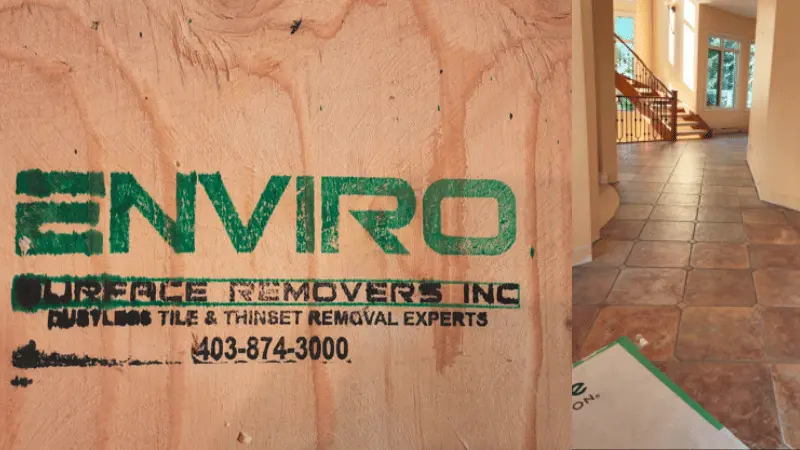
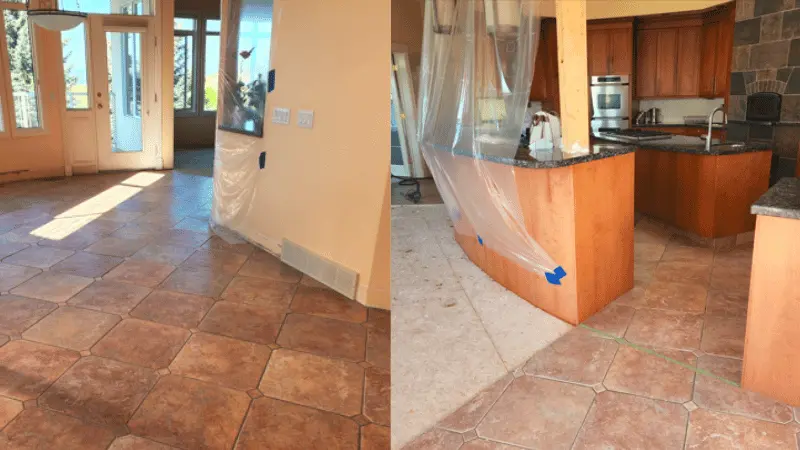
Full removal of octagon-and-diamond pattern tile flooring across the main floor of a large residential home, including the kitchen, entry hallway, and the area leading to the staircase.

The Challenge

This was a full main-floor removal in a finished, occupied-style home — granite countertops, custom cabinetry, and a stone accent wall all needed to stay fully protected while tile came out across multiple connected rooms.

What We Did

Before removal started, our crew sealed off cabinetry and finished surfaces with plastic sheeting, taped and secured rather than just draped, so dust and debris stayed contained to the work area throughout the job.

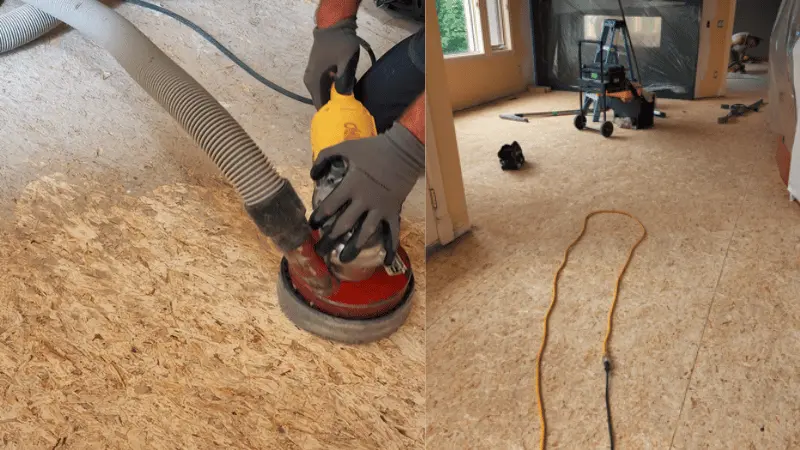
Tile came out down to the OSB subfloor beneath it, ground clean and smooth with handheld dustless equipment — HEPA extraction running continuously, pulling dust at the source rather than letting it settle across the cabinetry, countertops, and finished walls throughout the home. The job covered the full connected footprint: kitchen, entry hallway, and the space leading toward the staircase, all brought down to the same clean, ready subfloor.

The Result

A fully cleared, dust-free subfloor across the entire main floor, with the home’s finished surfaces — cabinets, countertops, and walls — untouched and protected throughout.

Dustless Vapour Blasting — Commercial Concrete Wall Prep

Case Study

The Job

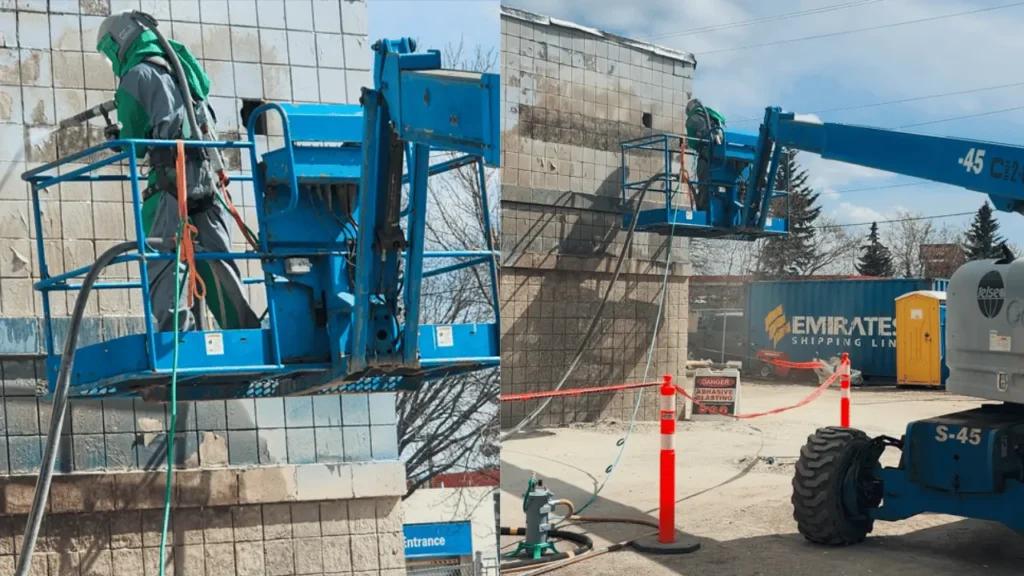
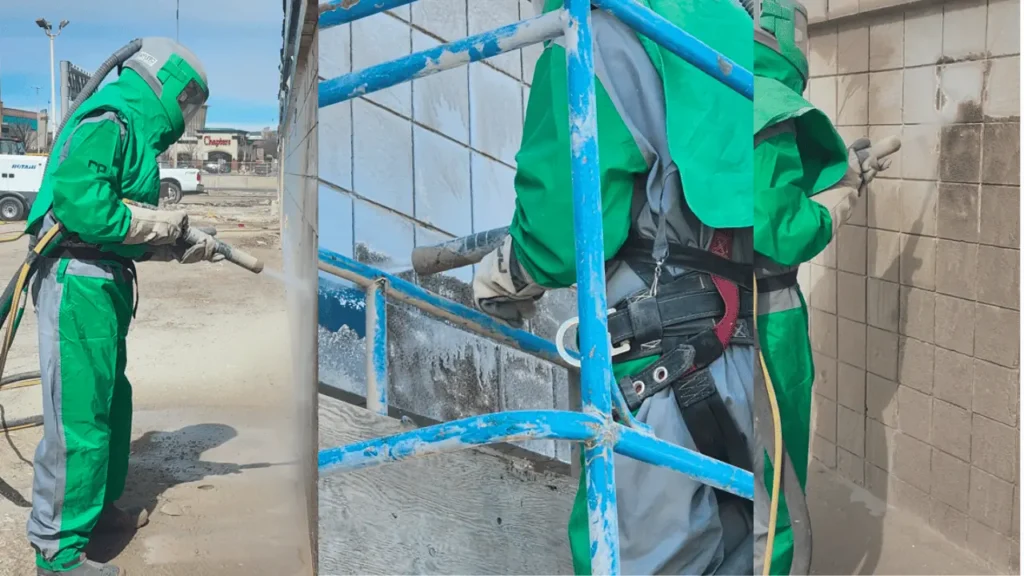
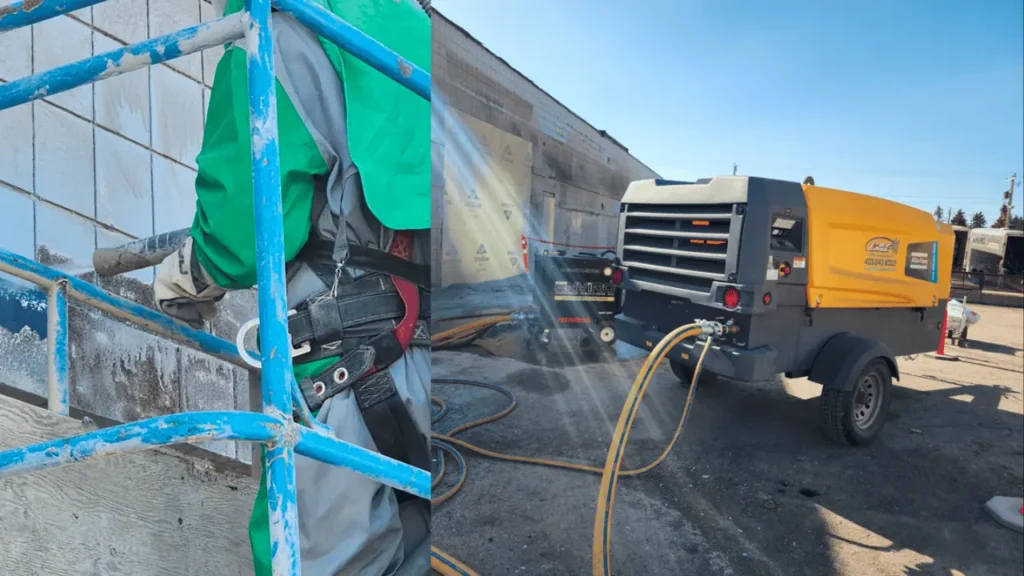
Surface preparation on interior concrete block walls in a commercial space, using dustless vapour blasting — a wet-abrasive process that strips old coatings and surface material the way sandblasting does, without generating airborne dust.

The Challenge

Traditional dry sandblasting produces heavy airborne silica dust, which isn’t practical or safe in an occupied commercial building. This job needed the walls stripped back to bare, clean concrete block without contaminating the space or requiring extended downtime for air clearance afterward.

What We Did

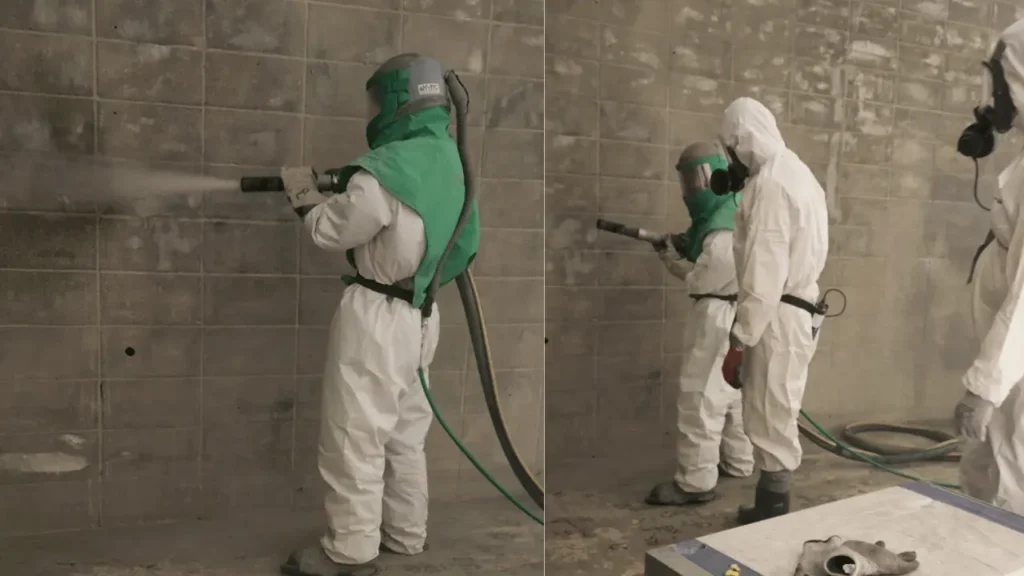
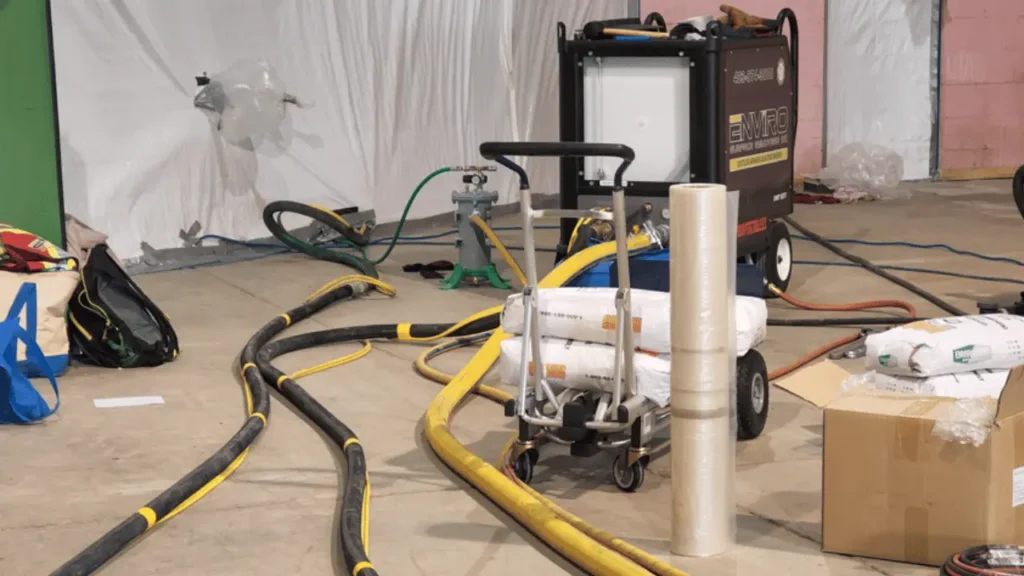
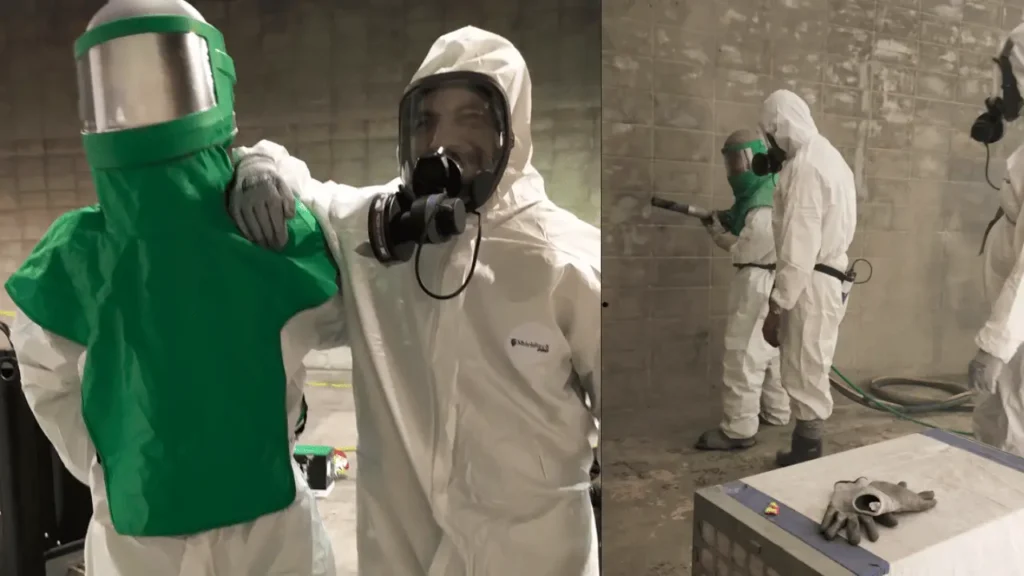
Our crew used backpack-mounted vapour blasting equipment, combining abrasive media with water to strip the wall surface while keeping the process wet rather than dry — the same principle behind dustless floor grinding, applied to vertical surfaces. Full PPE was worn throughout, including supplied-air respirators and protective suits, standard procedure for any abrasive blasting work regardless of material.

The blasting process worked section by section across the block wall, stripping old surface coating down to clean, bare concrete without the airborne dust cloud a dry sandblast would produce.

The Result

Clean, bare concrete block walls, ready for whatever finish or coating comes next — with none of the dust contamination or extended clearance time that traditional sandblasting requires.