
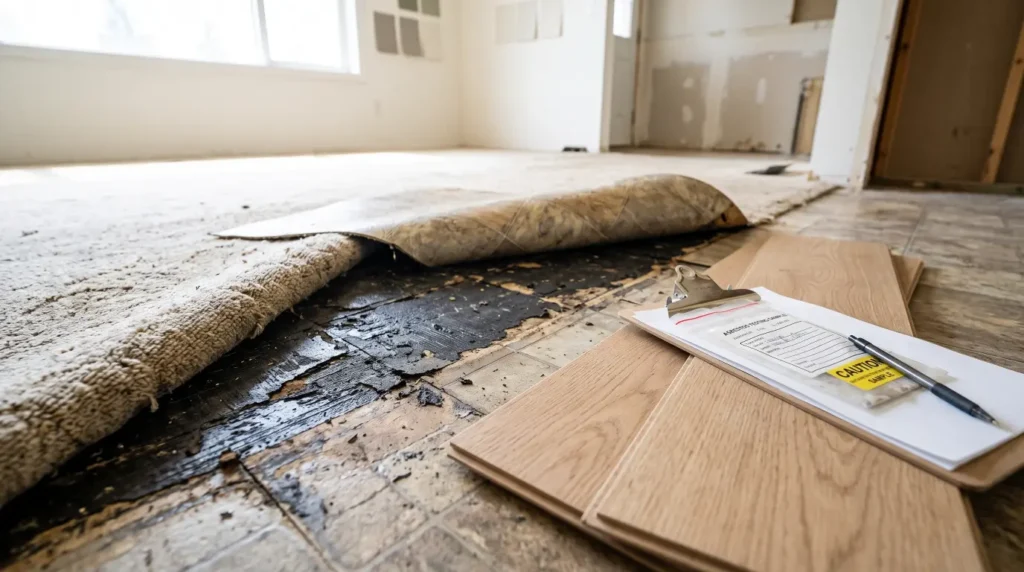
Sometimes. Should you replace flooring before selling your house? Only if the floors are damaged, stained, smelly or badly worn. Clean or refinish first when you can, and if the house is older, test the old flooring before anyone pulls it up.
Last reviewed October 2026 by the Enviro Surface Removers team. Prices and local markets change, so ask your realtor about your own street.
Should You Replace Flooring Before Selling? The Short Answer
Replace only what hurts the sale. Floors that are clean and sound usually do not need replacing. Floors that are stained, smelly, loose or worn through often do, because buyers notice them first.
This guide helps you decide room by room. It covers when to replace, when to refinish or clean, what the return figures really say and what Alberta sellers must tell buyers. It also covers a step most guides skip: testing old flooring for asbestos before you touch it.
We remove floors for a living, but we are not realtors. For your own market, ask a local agent.
Replace, Refinish or Leave It? A Quick Decision Table
| Floor and condition | Usual choice | Why |
|---|---|---|
| Carpet with deep stains, mildew or pet odour | Replace | Cleaning rarely fixes smell, and buyers pick up on it right away. |
| Carpet that is stained but sound | Professional clean first | RISMedia suggests cleaning before you decide to replace. |
| Hardwood that is scratched or dull | Refinish | Sanding and refinishing is usually the first step before replacement. |
| Hardwood with water damage or cupping | Replace the damaged area | The cause of the damage matters more than the finish. |
| Worn vinyl, linoleum or tile | Replace, after testing in an older home | Old layers may contain asbestos, so test before removal. |
| Dated but clean and intact floors | Leave and offer a credit if needed | Neutral and clean often beats new and rushed. |
Not sure what is under your carpet or vinyl? Read what an old floor can hide in our guide to asbestos floor tiles.
Signs Your Flooring Should Be Replaced Before You List
- Smell: mildew or pet odour that stays after cleaning
- Damage: large stains, burns, tears or boards that have lifted
- Wear paths: bare patches in hallways, stairs and entrances
- Moisture: cupped boards, soft spots or lifting tile near sinks, tubs and basement walls
- Mismatch: a different floor in every room, with ugly transitions
- Trip points: loose or cracked tile and uneven sections an inspector will flag
RISMedia gives a similar list: heavy stains, odour, frayed carpet and worn tile. It also warns that buyers who see bad floors may assume the house has other problems.
When to Leave It Alone: Clean, Refinish or Stage First
Replacing is the biggest and slowest option. Try the smaller ones first.
Clean
A professional carpet clean can lift a lot of grime. It will not fix mildew, so be honest about what you see and smell.
Refinish
Scratched hardwood can often be sanded and refinished instead of replaced. That keeps the original boards, which many buyers like.
Stage
Rugs, furniture and lighting pull the eye away from tired floors. This works best in low-traffic rooms. It does not hide damage in an entry or hallway.
What Buyers See First, and What Inspectors Find
Floors are one of the first things buyers notice. Smell, soft spots and uneven areas come next. An inspector may then flag moisture, loose tile or a slope in the floor.
This is why a quick cosmetic swap can backfire. New flooring laid over a damp or uneven subfloor can fail within months, and the buyer’s inspector will notice. Fix the cause first, whether that is water, glue residue or an uneven slab.
If you suspect trouble under the surface, see our pages on water damage under flooring and uneven floor repair.
Will New Flooring Pay Back? What the Return Figures Say
You will see big return numbers online. Treat them with care.
CIBC says the Appraisal Institute of Canada puts the payback on replacing old or outdated flooring at roughly 50 to 75 percent. The CIBC page does not link the study, so the figure is secondhand. Another real estate article claims about 70 percent, with no source.
Read those as a rough range, not a promise. If you spend a lot and only get part of it back, new flooring is a cost you take on to sell faster. Ask a local realtor how homes like yours sell with and without new floors. We do not quote prices here, because they depend on the size of the job, the material and the glue underneath.
Old Flooring in Alberta Homes Built Before 1990: Test Before You Pull It Up
This is the step most selling guides leave out. If your house was built before 1990, some old flooring layers may contain asbestos. Health Canada lists floor tiles among the household materials that can.
The same page says material that is tightly bound, in good condition and left alone is not a significant risk. The risk starts when it is cut, sanded, scraped or broken. That is exactly what happens when someone rips out old floors in a rush before a listing.
You cannot tell by looking. Old tile, sheet vinyl and the glue under them all look like ordinary flooring. Health Canada says to hire a professional to test before a major renovation or demolition. If asbestos is found, hire a qualified specialist before work starts.
- Do not sand, scrape or pry up old tile, sheet vinyl or backing yourself
- Book an independent consultant to sample the flooring and send it to a lab
- Keep the lab report, because buyers and their agents may ask for it
- If asbestos is found, let a trained abatement crew remove it before new flooring goes in
Our guides explain the details: how asbestos testing works, what asbestos looks like and asbestos floor tiles.
What You Must Tell Buyers in Alberta
Sellers in Alberta do not have to point out every flaw. The rules turn on whether a defect is hidden or visible.
Hidden defects
A latent defect is a hidden problem that a reasonable inspection would not find. If it is dangerous or makes the home unfit to live in, you must disclose it. A LawyerInfo guide on Alberta disclosure says hiding a known one can lead to a misrepresentation lawsuit. An As-Is clause does not protect a seller who hides a known dangerous defect.
Visible defects
A patent defect is one a buyer or inspector can see, such as a stained carpet. The RECA seller checklist says you have no legal duty to disclose those, though your agent should talk through the pros and cons of mentioning them.
Property information statement
In Alberta, the seller’s property information statement is voluntary. If you fill one out, every answer must be honest. The RECA checklist also says that once a material latent defect is fully fixed, you have no legal duty to disclose that it was fixed.
So if you find asbestos in old flooring, the safe path is to deal with it properly and keep the paperwork. This is general information, not legal advice. Ask your realtor or a real estate lawyer about your own sale. See the LawyerInfo guide to Alberta disclosure and the RECA seller checklist.
What Often Hides Under Old Floors
Old flooring rarely comes up clean. Sellers are often surprised by what sits under the top layer.
- Old glue: black mastic or hardened adhesive that is slow to remove, which we explain in how to remove glue from floors
- Thinset and grout: stuck to the slab after tile comes up, covered in leftover thinset residue
- Water damage: stains, swollen subfloor or mould where moisture sat
- Uneven slab: dips and humps that new flooring will show
A floor that looks like a one-day swap can turn into a week once these show up. That is why the work should be planned before you list, not during an open house weekend.
Another Option: Offer a Flooring Allowance Instead
Sometimes the best answer is to leave the floors. If they are dated but clean and sound, a buyer may prefer to choose their own. You can price the home to reflect the floors, or discuss a credit with your agent.
This also avoids the risk of a rushed install, which buyers and inspectors notice. Your realtor can tell you how buyers in your area respond.
How to Decide in Five Steps
1. Walk each room as a buyer
Look at colour, smell, wear and transitions. Note anything that would make you walk out.
2. Try the small fixes first
Clean carpets, refinish scratched hardwood and repair loose tile before replacing anything.
3. Check the age of the house
If it was built before 1990, have old flooring tested by an independent consultant before anyone disturbs it.
4. Ask a realtor about your market
They know what homes like yours sell for with and without new floors, and whether a credit makes sense.
5. Plan the work early
Finish any removal and install well before listing, so you are not rushing or leaving surprises for the inspection.
Where Enviro Surface Removers Fits In
We remove the old floor. We do not sell or install new flooring, and we do not test our own work. An independent consultant tests before the job and clears the area when it is done.
We seal the work area and poly off rooms that are not being worked on. Our tools have dust shrouds connected to HEPA vacuums, so the work is Virtually Dust-Free. Our crew takes an asbestos abatement course every couple of years to stay certified. See our floor removal services and asbestos removal and abatement page.
If you are getting ready to sell and your old floors need to come out, we clear them, deal with the glue and leave a clean base for your installer. Look at our carpet removal, hardwood floor removal and linoleum removal pages.
Replacing Flooring Before Selling: Common Questions
Should I replace flooring before selling my house?
Only if it hurts the sale. Replace floors that are stained, smelly, loose or worn through. Clean, refinish or leave floors that are sound. A local realtor can tell you what buyers in your area expect.
Should I replace carpet before selling my house?
If the carpet is clean and in good shape, a professional clean may be enough. Replace it if it has deep stains, mildew or pet odour that cleaning does not fix.
Is it worth replacing hardwood floors before selling?
Often it is better to refinish. Sanding and refinishing scratched hardwood keeps the original boards. Replace only the boards that are damaged or water stained.
Does new flooring increase the sale price?
It can help a home sell faster, but the return varies. CIBC cites the Appraisal Institute of Canada at roughly 50 to 75 percent payback on outdated flooring, though the study is not linked. Ask a realtor for your own market.
What flooring do buyers like best?
Neutral, clean and consistent floors tend to appeal most. RISMedia notes that hardwood is popular in living areas and tile suits wet rooms. Match the floor to how the room is used.
Should I replace flooring or offer a credit?
If floors are dated but clean, a credit or a price that reflects them can work. Your realtor can tell you which suits your market and timeline.
Do I have to disclose old or damaged flooring?
Visible problems, like a stained carpet, usually do not need to be disclosed. Hidden dangerous defects do. Ask your realtor or a real estate lawyer about your case.
Can old flooring contain asbestos?
Yes, in older homes. Health Canada lists floor tiles among household materials that can contain it. Only a lab test can confirm. See our guide to asbestos testing.
How do I know if my floors have asbestos?
You cannot tell by looking. An independent consultant takes samples and a lab reports. Do not cut, sand or scrape old flooring until you have the result.
Can I sell a house with asbestos floor tiles?
Tightly bound tiles in good condition that are left alone are not a significant risk, says Health Canada. If you plan to remove them, test first and use a trained crew. Ask your realtor about disclosure.
Should I remove old flooring myself before listing?
In a house built before 1990, test first. Cutting, scraping or breaking old flooring can release fibres if it contains asbestos. Newer homes are lower risk, but glue and thinset are hard, slow work.
How long before listing should I replace floors?
Finish well before listing. Rushed work shows, and hidden problems under the floor can add days. Plan the removal, any repairs and the install early.
What if there is water damage under my floor?
Find and fix the source first. New flooring over a damp or uneven subfloor can fail and an inspector will flag it. Then repair the subfloor before installing.
What does Enviro Surface Removers do for home sellers?
We remove old flooring and adhesive, including asbestos abatement when testing calls for it, and leave a clean base for your installer. We do not install new flooring.