
Asbestos in drywall is real, but it is limited to older walls. It is most often found in the joint compound, tape and texture, not always in the board. You cannot tell by looking. A lab sample is the only way to know, and the safe first step before any cutting or sanding.
Last reviewed October 2026 by the Enviro Surface Removers team.
Does Drywall Contain Asbestos? Sometimes, and the Joint Compound Is the Usual Suspect
Sometimes. Does drywall contain asbestos? It can, mainly in older walls. The joint compound that covers the seams is the material most often flagged. You cannot see asbestos, so a lab sample is the only way to know.
Drywall is a sheet of gypsum between layers of paper. Builders tape the seams, cover them with joint compound and sand them smooth. Before the rules changed, some of that compound, and some wall texture, had asbestos mixed in. Asbestos resists fire, and that made it a common additive.
That is why asbestos in drywall is really a question about the whole wall: the board, the tape, the compound and any texture or plaster on top. Asbestos in joint compound is the main worry, but each layer can be different. This guide shows which parts matter, how to judge your walls and what Alberta expects before you open one up.
Quick Facts on Asbestos Drywall
- Where: joint compound, tape, texture and skim coats are the parts most often flagged
- Age: walls finished before about 1990 are the main concern
- Sight: you cannot confirm asbestos by looking at a wall
- Safe state: whole, painted, undisturbed walls are not a significant risk, says Health Canada
- The danger moment: sanding, scraping, drilling, cutting or breaking the wall
- Confirmation: an independent consultant takes a sample and a lab reads it
- The ban: Canada’s 2018 ban does not cover walls that are already built
- Alberta: OHS must be told 72 hours before work that may release fibres
Where Asbestos Can Hide in a Wall: Board, Joint Compound, Texture and Plaster
A finished wall has layers, and each layer gets its own question. Use this table to see where asbestos drywall problems usually start.
| Layer | What it is | What to know |
|---|---|---|
| Gypsum board | The paper-covered panels | Health Canada lists drywall among older materials that may hold asbestos. Sample the board along with the finish layers. |
| Joint tape and joint compound | The tape and “mud” that fill and cover the seams | The layer most often flagged. Alberta’s manual lists drywall jointing materials among past uses, and Metro Vancouver says tape and compound sometimes held asbestos until about 1990. |
| Texture and skim coat | A sprayed, stippled or troweled finish over the wall | Alberta’s manual lists stippled finishes among past uses. A texture can test differently from the compound under it. |
| Plaster and lath | The older wall system that drywall replaced | Health Canada lists plaster among older materials that may contain asbestos. Treat it the same way: sample before you cut. |
| Spackle and patches | Repair fillers over holes and cracks | Health Canada lists spackling among surface treatments that may contain asbestos. A repair can be older or newer than the wall around it. |
Gypsum Board, Wallboard and Sheetrock: Three Names, One Question
Gypsum board, wallboard and drywall are the same product. Sheetrock is a brand name that many people use for all of it. So gypsum board asbestos, asbestos wallboard and sheetrock asbestos all ask one thing: does this wall have asbestos in it? The answer depends on the layers and the age, not on the name.
What Does Asbestos Wallboard Look Like?
It looks like any other wallboard. The fibres are too small to see, and the compound looks the same with or without them. Colour, feel and paint tell you nothing. If you are asking what does asbestos wallboard look like because you plan to cut or sand, treat the answer as unknown and sample first. For other materials, read our guide on what asbestos looks like.
Asbestos in Drywall in Canada: Years, the 1980 Federal Rule and the 2018 Ban
Was asbestos used in some drywall finishes in Canada? Yes. Health Canada says that before 1990, asbestos was mainly used to insulate and fireproof buildings. Metro Vancouver says the tape and joint compound between drywall boards sometimes had asbestos until about 1990. See the Metro Vancouver testing handout.
The Alberta Asbestos Abatement Manual (2019 edition) adds dates. It lists plaster or drywall jointing materials among past uses. It says federal rules prohibited drywall joint cement and spackling or patching compounds from April 24, 1980. Later rules allowed them only if the asbestos could not separate from the product while it was prepared, applied or removed.
A rule change in 1980 did not clear every shelf or every wall. Old stock stayed in use, and older walls were patched with older material. No one can give you one cut-off year. Age tells you when to test, not what the result will be.
Canada’s national ban on making, selling, using and importing asbestos products took effect on December 30, 2018. It does not cover asbestos already built into a building. See the federal regulations summary. Can drywall contain asbestos if the house is from the 1970s or 1980s? Yes, and that is the group to check first. A wall finished long after 1990 is much less likely to, but only a sample gives a sure answer.
How Can You Tell If Your Walls Have Asbestos? Age, Layers and Look-Alikes
You cannot tell from a photo or by touch. But some facts tell you when to sample before anyone touches the wall.
- The home, or the wall finish, dates from before 1990
- The walls have a sprayed, stippled or troweled texture
- There are older patches or repairs in different materials
- The house has plaster and lath walls, or a mix of plaster and drywall
- An old inspection, plan or report mentions asbestos
- You plan to sand, cut, drill or take out part of a wall
Those facts do not prove asbestos. They tell you a sample is worth taking. Many homes near the Beltline and Kensington in Calgary, and around Whyte Avenue in Edmonton, date from before 1990. A renovation may have mixed old and new walls in one room, so each wall gets its own answer.
Why you should not test it yourself
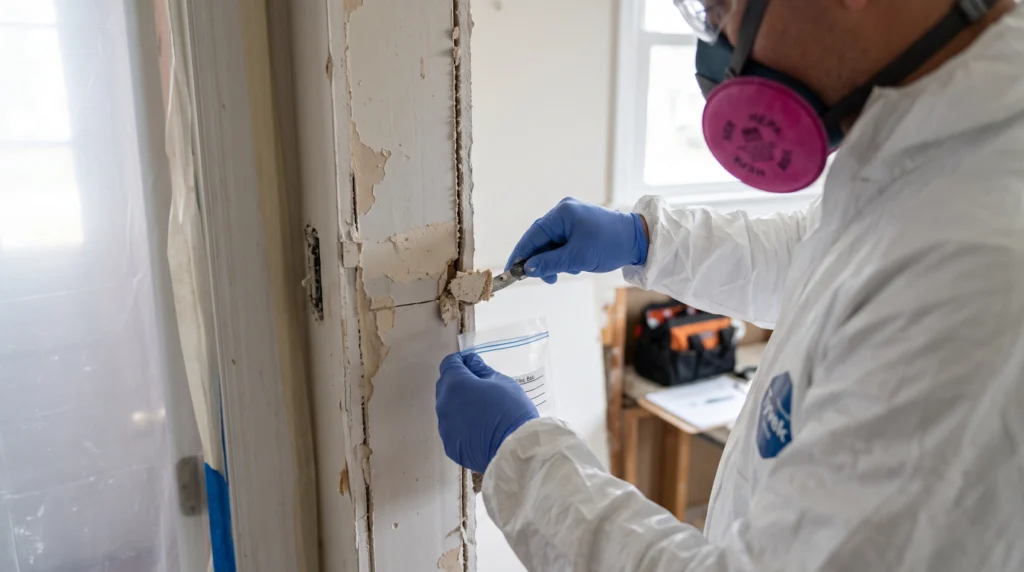
Cutting a piece out of the wall breaks the finish and puts dust in the air. That is the thing you are trying to avoid. A consultant takes the sample with wetting and containment and decides which layers to sample. Health Canada says to hire a professional to test before you renovate.
Is It Safe to Leave Asbestos Drywall Alone?
Often, yes. Health Canada says materials that are tightly bound, in good condition and undisturbed are not a significant risk. A whole, painted wall is in that group. Asbestos in drywall becomes a risk when fibres get into the air, which happens when someone drills, sands, scrapes or breaks the wall. See the Health Canada guidance on asbestos and your health.
Watch for changes in an older wall:
- Cracks or crumbling at the seams
- Water stains or soft, damp patches
- Dents or gouges from furniture or tools
- Texture flaking onto the floor
If you see any of these, keep people out of the area and call a consultant. Do not dry-sweep the dust or run a regular vacuum over it. That puts fibres into the air.
A Nail, an Outlet or a Sander: What Each Kind of Disturbance Means
Not every job is the same size. Health Canada names drilling, sanding, scraping and breaking as the ways fibres get released. The bigger and dustier the job, the more the wall matters.
Picture hooks and small nails
A single small nail makes very little dust, but it is still a disturbance. If the wall dates from before 1990 and you plan more than one hook, or any drilling, ask a consultant first.
Cutting an opening for an outlet, vent or pipe
Cutting drywall makes dust and breaks the joint compound. An old wall needs a sample before the cut, not after. Plan the sample into the job schedule so the work does not stop halfway.
Sanding, scraping and demolition
These jobs release the most fibres. Dry sanding joint compound on an untested wall from before 1990 is the classic mistake. Do not do it. Sample first. If the result is positive, the work needs a trained crew.
Already Sanded or Cut Into Old Drywall? Six Steps to Take Now
If you disturbed asbestos on drywall, or think you did, stay calm. One short exposure is different from years of exposure. But the cleanup must be done right. Take these steps in order.
1. Stop work
Stop sanding, cutting or drilling right away. Leave the tools where they are.
2. Leave the room and close the door
Keep people and pets out. Turn off any fan or vent that moves air through the room.
3. Do not clean it up
Do not sweep, wipe the dust dry or run a regular vacuum over it. That puts fibres into the air.
4. Call an independent consultant
The consultant checks the wall and the dust, takes samples and sends them to a lab.
5. Wait for the written results
Do not go back in to work until the report is in your hands.
6. Plan the cleanup
If the report is positive, a trained abatement crew cleans the area. If it is negative, normal dust cleanup is enough.
If you are worried about your health, talk to your doctor.
Painting, Covering or Renovating Around Asbestos Drywall
Paint and cover-ups hide a wall. They do not take the asbestos out. Use this table to compare your options. A consultant’s report tells you which ones fit your wall.
| Option | When it fits | What to watch |
|---|---|---|
| Leave and monitor | The wall is whole and nobody will disturb it | Check seams for cracks and stains. Tell every trade before they cut or drill. |
| Paint | The wall is whole and a consultant has checked it | Do not sand or scrape first. Sanding is what releases fibres. |
| Cover with new board | You want a new surface without opening the wall | Screws go through the old layers. The asbestos stays in the building. |
| Open the wall and have the material taken out | A renovation will cut it, or it is damaged | Needs a trained abatement crew, notice to OHS and a consultant’s clearance. |
Tell every trade and future owner what the report found. Ceilings have their own rules, so read our popcorn ceiling asbestos guide if yours is textured.
How a Drywall Sample Is Taken and Tested
A consultant who works for you takes small samples. The spot is wetted and the area is covered, so no fibres drift. The consultant decides which layers to sample, such as the compound, the tape and any texture. The samples go to an accredited lab, which reports whether asbestos is present.
We do not take samples or run tests. Keeping the consultant separate from the abatement crew protects you. Read how asbestos testing works for the full process.
Alberta Rules Before You Open an Old Wall
Alberta’s OHS Code, section 34, says building materials that could release asbestos fibres must be removed before a building is demolished. Renovation has its own rules, and the wall has to be dealt with before it is disturbed.
An employer must tell Alberta OHS 72 hours before work that may release asbestos fibres. The Alberta Asbestos Abatement Manual sets out safe-work steps for abatement.
Cities ask for proof too. In Calgary, a renovation or demolition permit needs an asbestos abatement information form. In Edmonton, a renovation application needs written notice about asbestos. See the City of Edmonton asbestos form. Ask your city office if you are not sure what your job needs.
When Asbestos Drywall Needs a Trained Abatement Crew
If the report is positive and the wall must be opened, it needs a crew trained in asbestos abatement. Our crew takes an asbestos abatement course every couple of years to stay certified. The consultant tests before the job and clears the area when it is done.
We seal the work area with plastic sheeting and poly off rooms that are not being worked on. We use tools with dust shrouds connected to HEPA vacuums, so the work is Virtually Dust-Free. The waste is bagged and handled as asbestos waste.
For the full process, see our asbestos removal and abatement page. If the wall is coming out as part of a larger renovation, see our interior wall demolition service.
Asbestos in Drywall: Common Questions
Does drywall contain asbestos?
Some older drywall systems do. The joint compound, tape and texture are the parts most often flagged, and Health Canada lists drywall among materials that may hold asbestos. You cannot tell by sight. A lab sample is the only way to know.
Is there asbestos in drywall built before 1990?
It is possible. Health Canada says asbestos was mainly used in buildings before 1990, and Metro Vancouver says joint compound sometimes held it until about then. Many walls from those years have none. Each wall needs its own sample.
Was asbestos used in drywall in Canada after 1980?
Federal rules prohibited drywall joint cement from April 24, 1980, according to Alberta’s manual (2019 edition). Later rules allowed it only if the asbestos could not separate from the product. Old stock and old repairs mean age alone cannot clear a wall.
Does joint compound have asbestos?
Some older joint compound did. Alberta’s manual lists drywall jointing materials among past asbestos uses. Compound made after the rules changed is much less likely to, but you cannot tell by sight. A lab test of the compound is the only sure answer.
Can you tell if drywall has asbestos by looking?
No. The fibres are too small to see, and the wall looks the same with or without them. Age, texture and repairs are clues that a sample is worth taking. A consultant takes the sample and a lab reads it.
Is gypsum board the same as drywall and sheetrock?
Yes. Gypsum board, wallboard and drywall are the same product. Sheetrock is a brand name people use for all of it. The question is the same for each: what is in the board, the compound and any texture on top.
Is it dangerous to live with asbestos drywall?
Not usually while it is whole and undisturbed. Health Canada says materials that are tightly bound, in good condition and left alone are not a significant risk. The danger comes when someone sands, cuts, drills or breaks the wall.
Can I paint over asbestos drywall?
You can, if a consultant has checked the wall. Do not sand or scrape first. Paint hides the surface but does not take the asbestos out, so tell future trades and owners what the report found.
Can I hang a picture or drive a nail into old drywall?
A single small nail makes very little dust, but it is still a disturbance. If the wall dates from before 1990, ask a consultant first, especially if you plan more than one hook or any drilling.
What if I already sanded or cut into old drywall?
Stop work, leave the room and close the door. Do not sweep or vacuum. Call an independent consultant to sample the wall and the dust before anyone cleans up. If you are worried about your health, talk to your doctor.
Do I need to test before renovating in Alberta?
Health Canada says to hire a professional to test before renovating an older home. Alberta’s OHS Code, section 34, also requires material that could release fibres to be dealt with before demolition. Sample before you cut, sand or demolish.
Who takes the sample?
An independent asbestos consultant, who works for you. The consultant takes the samples and reads the lab report. A removal company should not test its own work.
Does Canada’s asbestos ban cover my walls?
No. The ban from December 30, 2018 stops new asbestos products from being made, sold, used or imported. It does not cover asbestos already built into a building, so older walls still need a sample.
Is drywall asbestos the same as popcorn ceiling asbestos?
They are related but not the same. A popcorn ceiling is a sprayed texture. Drywall is the board plus the joint compound. Either can hold asbestos in an older building, and each needs its own sample. See our popcorn ceiling guide.