
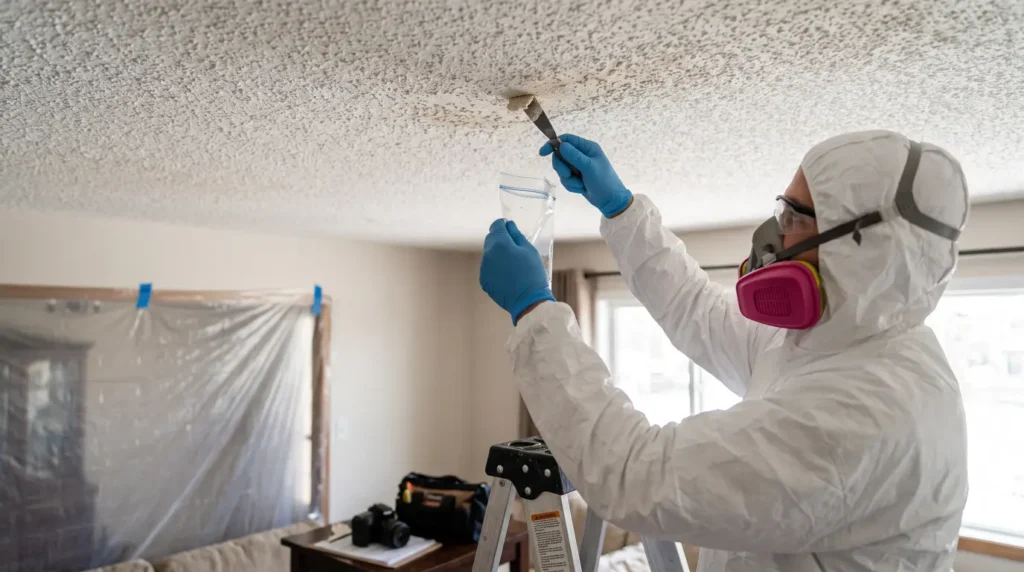
An older popcorn ceiling may contain asbestos. You cannot tell by looking, and only a lab sample can confirm it. Here is how to judge the risk, your options, and the Alberta rules that apply.
Last reviewed October 2026 by the Enviro Surface Removers team.
Does My Popcorn Ceiling Have Asbestos? The Short Answer
It might. A popcorn ceiling that is original to a building from before 1990 may contain asbestos. Does popcorn ceiling have asbestos in every home? No. But you cannot tell by looking, because the fibres are too small to see. A lab sample is the only way to know.
A popcorn ceiling is a bumpy texture sprayed onto the ceiling. Older mixes sometimes had asbestos added because it resists fire. Newer mixes do not. Both look the same once dry and painted.
This guide to popcorn ceiling asbestos explains which ceilings are most likely to have it, how to judge yours, and what to do. Enviro Surface Removers does the removal. An independent consultant does the testing, so you get an honest result.
Popcorn Ceiling Asbestos at a Glance
- The risk: popcorn ceiling and asbestos go together mainly in buildings from before 1990
- Sight: you cannot confirm asbestos by looking at the ceiling
- Leave it alone: intact, undisturbed material is not a significant risk, says Health Canada
- The danger moment: scraping, sanding, drilling or knocking the texture loose
- Paint and cover-ups: they hide the texture. They do not remove the asbestos.
- Who confirms it: an independent consultant who sends a sample to a lab
- Who removes it: a trained abatement crew, once the result says it is needed
- Alberta: OHS must be told 72 hours before work that may release fibres
Do Popcorn Ceilings Contain Asbestos? Which Ones Are Most Likely
Do popcorn ceilings contain asbestos? Some do, and many do not. The age of the ceiling is the best clue. Health Canada says that before 1990, asbestos was mainly used to insulate and fireproof buildings. Ceilings that went up in those years are the ones to be careful with.
A ceiling is more likely to have asbestos when:
- The building was built before 1990 and the texture looks original
- The texture was sprayed on, not rolled or troweled by hand
- Nobody has records of a new texture being added later
- It sits in a condo, apartment or house from the 1970s or 1980s
Many buildings near the Beltline in Calgary or around the University of Alberta in Edmonton date from before 1990. A newer ceiling in the same building may have been redone. That is why each ceiling gets its own sample.
No one can give you one cut-off year that applies to every ceiling. Stock was used up at different times, and some jobs reused older material. Only a lab can say for yours.
Asbestos in Popcorn Ceilings Canada-Wide: Age, Other Names and the 2018 Ban
Asbestos in popcorn ceilings Canada has seen over the years is still a common worry in older homes. Canada’s national ban on making, selling, using and importing asbestos products took effect on December 30, 2018. That ban does not cover asbestos already built into a building. See the federal regulations summary. An old ceiling stays in place until someone deals with it.
In Canada, the same finish goes by many names. You may hear it called any of these:
- Popcorn ceiling
- Stucco ceiling
- Cottage cheese ceiling
- Acoustic ceiling
- Textured or sprayed ceiling
The name does not change the risk. Age, how it was applied and the condition of the material matter more. Not sure what you are looking at? Our guide on what asbestos looks like covers other materials in the home.
How Can I Tell If My Popcorn Ceiling Has Asbestos? Signs and Look-Alikes
You cannot tell from a photo or by touch. But some signs tell you when to call a consultant before doing anything to the ceiling.
- The building went up before 1990 and the ceiling is original
- The texture is sprayed on in small bumps
- There are cracks, flaking, water stains or loose bits on the floor
- Nothing in the home records shows a newer texture
- An old report, plan or inspection mentions asbestos
- You plan to scrape, sand, drill or remove the texture
Those signs do not prove asbestos. They tell you when a sample is worth taking.
Popcorn or plain texture?
Some ceilings that look like popcorn are made with drywall compound, rolled on by hand. That is a different material. People often cannot tell the two apart, and a lab sample settles it. Joint compound can also hold asbestos in older homes, so a look-alike is still worth a sample.
Why you should not scrape a sample yourself
Knowing how to tell if popcorn ceiling has asbestos is a job for a lab. Scraping a test patch breaks the texture and puts fibres in the air. That is the exact thing you are trying to avoid. A consultant takes the sample with the right wetting and containment.
Is It Safe to Leave an Asbestos Popcorn Ceiling Alone?
Often, yes. Popcorn ceiling asbestos that is whole and dry is a low risk. Health Canada says there are no significant health risks when asbestos materials are tightly bound, in good condition and left alone. A ceiling that is whole and dry is in that group. See the Health Canada guidance on asbestos and your health.
The risk rises when the material is damaged or disturbed. Watch for these changes:
- Texture falling or flaking onto floors and furniture
- Cracks or sagging
- Water stains from a leak above
- Dents or gouges from furniture, ladders or tools
If you see any of these, keep people out of the area and call a consultant. Do not sweep up the bits or run a regular vacuum over them. That puts fibres into the air.
Painting or Covering an Asbestos Popcorn Ceiling: What Changes Later
Paint and cover-ups are popular fixes for popcorn ceiling asbestos because they take less effort than removal. They hide the texture. They do not take the asbestos out. Each one has trade-offs you should know first.
Painting
Paint can hold loose bits in place when the ceiling is whole. But a roller can knock texture loose, and spraying can wet it until it falls. Paint also adds a layer that can make a later removal harder. Do not sand or scrape the ceiling before you paint.
Covering with new board or a skim coat
New board hides the old ceiling and leaves it sealed behind. Health Canada says material sealed behind walls and floors is not a significant risk. But fastening new board can disturb the old texture, and sanding a skim coat can too. The asbestos stays in the building, so future trades and owners need to know it is there.
Have a consultant look at the ceiling first, and ask how the work will be done.
Leave, Paint, Cover or Remove: Options Compared
Use this table to compare options. A consultant’s report tells you which ones fit your ceiling.
| Option | When it fits | What to watch |
|---|---|---|
| Leave and monitor | The ceiling is whole and nobody will disturb it | Check for cracks, stains and flaking. Tell trades before they work overhead. |
| Paint | The ceiling is whole and a consultant has checked it | Rolling can loosen texture. Paint adds a layer that can make later removal harder. |
| Skim coat | The texture is shallow and in good shape | Sanding and mixing can disturb it. It needs a plan first. |
| Cover with new board | You want a flat ceiling without removal | Fastening can disturb the texture. The asbestos stays in the building. |
| Seal or enclose by a trained crew | The material is in fair shape and does not need to come out | Done by professionals. The material stays, so it needs checking later. |
| Remove | A renovation will disturb it, it is damaged, or you want it gone | Needs a trained abatement crew, notice to OHS and a consultant’s clearance. |
Is covering safer than removing? It can be, while the ceiling stays whole and nobody works on it. Removal gets rid of the problem for good. The best choice depends on the condition of the ceiling and your plans.
What to Do If You Accidentally Removed or Scraped an Asbestos Popcorn Ceiling
If you accidentally removed asbestos popcorn ceiling texture, or scraped part of it, do not panic. One short exposure is different from years of exposure. But the cleanup must be done right. Take these steps in order.
1. Stop work
Stop scraping, sanding or drilling right away. Leave the tools where they are.
2. Leave the room and close the door
Keep people and pets out. Turn off any fan or vent that moves air through the room.
3. Do not clean it up
Do not sweep, wipe it dry or run a regular vacuum over it. That puts fibres into the air.
4. Call an independent consultant
The consultant checks the ceiling and the debris, takes samples and sends them to a lab.
5. Wait for the report
Do not go back in to work until the written results are back.
6. Plan the cleanup
If the report is positive, a trained abatement crew cleans up the area. If it is negative, normal dust control is enough.
If you are worried about your health, talk to your doctor.
How a Popcorn Ceiling Sample Is Confirmed
A consultant who works for you takes a small sample. The spot is wetted and the area is sealed, so no fibres drift. The sample is bagged and sent to a lab. The lab usually reads it under a polarized light microscope and reports whether asbestos is present.
We do not take samples or run tests. Keeping the consultant separate from the removal crew protects you. Read how asbestos testing works for the full process.
Alberta Rules Before You Renovate a Popcorn Ceiling
Alberta’s OHS Code, section 34, says building materials that could release asbestos fibres must be removed before a building is demolished. Renovation work has its own rules, and the ceiling has to be dealt with before it is disturbed.
An employer must tell Alberta OHS 72 hours before work that may release asbestos fibres. The Alberta Asbestos Abatement Manual sets out safe-work steps for abatement.
Cities ask for proof too. In Calgary, a renovation or demolition permit needs an asbestos abatement information form. In Edmonton, a renovation application needs written notice about asbestos, such as a consultant’s letter of clearance. See the City of Edmonton asbestos form. Ask your city office if you are not sure what your job needs.
How Asbestos Popcorn Ceilings Are Removed Safely
Our crew removes textured ceilings only as part of an asbestos abatement job. If your result is negative, any qualified contractor can scrape the ceiling. If it is positive, it needs a trained abatement crew.
On an abatement job, we seal the work area with plastic sheeting. Rooms we are not working in are polyed off. We work with tools that have dust shrouds connected to HEPA vacuums, so the work is Virtually Dust-Free. The waste is bagged and handled as asbestos waste. The consultant checks the area when the job is done.
For the full process, see our asbestos removal and abatement page. Learn more about identifying other materials in the home in our guide on what asbestos looks like.
Popcorn Ceiling Asbestos: Common Questions
Do all popcorn ceilings have asbestos?
No. Many older ones do, and newer ones usually do not. You cannot tell by looking. A lab sample is the only way to know whether yours contains asbestos.
Do popcorn ceilings have asbestos if they were built after 1990?
Most likely not, but nobody can promise it. Stock was used up at different times, and some jobs reused older material. A sample from your own ceiling is the only sure answer.
What year did popcorn ceilings stop containing asbestos?
There is no single year. Health Canada says asbestos was mainly used in buildings before 1990, and Canada’s national ban started on December 30, 2018. Ask a consultant to sample the ceiling.
How can I tell if my popcorn ceiling has asbestos?
You cannot tell by sight or touch. Age, damage and how the ceiling was applied are clues. A consultant takes a small sample and a lab reads it under a microscope.
Is a stucco ceiling the same as a popcorn ceiling?
In Canada, people often use the two names for the same bumpy sprayed finish. Cottage cheese and acoustic ceiling are other names. The name does not change the risk.
What is a popcorn ceiling made of?
It is a spray-on texture that dries into small bumps. Older mixes sometimes had asbestos fibres added. Newer ones do not. The two look the same once painted.
Is a flaking popcorn ceiling dangerous?
It can be if the material has asbestos. Flaking means the texture is breaking down. Keep people out, do not sweep it up and call a consultant.
Can I paint over an asbestos popcorn ceiling?
Do not sand or scrape first. Paint hides the texture but does not remove the asbestos, and rolling can loosen bits. Ask a consultant to check the ceiling before you paint.
Can I cover a popcorn ceiling with drywall or a skim coat?
You can, but the asbestos stays in the building. Fastening board or sanding a skim coat can disturb the texture. Have a consultant look first, and tell future trades about it.
Is covering safer than removing a popcorn ceiling?
While the ceiling stays whole and nobody works on it, covering can be low risk. Removal ends the problem. Which one fits depends on the ceiling’s condition and your plans.
What if I already scraped my popcorn ceiling?
Stop work, leave the room and close the door. Do not sweep or vacuum. Call an independent consultant to sample the ceiling and debris before anyone cleans up.
Can I wet-scrape and remove it myself?
We do not advise it. Removal can release fibres, and Alberta requires OHS notice and proper handling of asbestos waste when the work is regulated. Call a consultant first.
Does Canada’s asbestos ban apply to my ceiling?
No. The ban from December 30, 2018 stops new asbestos products from being made, sold, used or imported. It does not cover asbestos already built into a building.
Who confirms asbestos in a popcorn ceiling in Alberta?
An independent asbestos consultant. The consultant takes the samples and reads the lab report. A removal company should not test its own work.